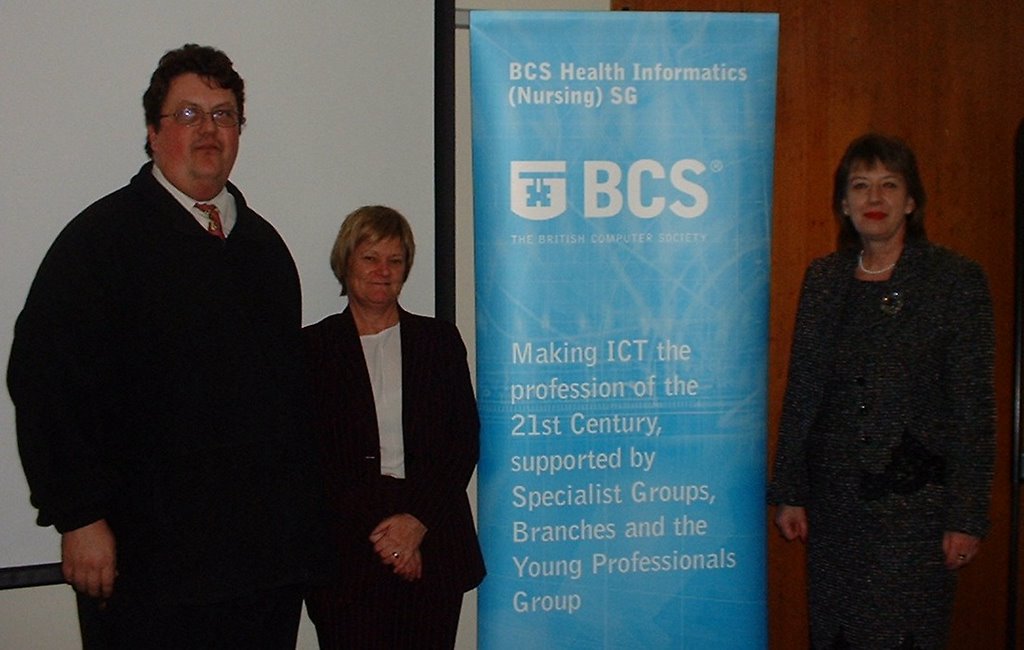
I've just signed up for the Med-e-Tel Newsletter in preaparation for their nconference in April (
more details) and with their permission share this below.
If you are interested in recieving this by email please sign up using the form at:
http://www.medetel.lu/index.php?rub=news&page=newsletter_subscription------
March 8, 2006
newsletter - newsletter - newsletter
In this newsletter:
- Cardiocom Multi-Disease Management is your single source for vital sign remote biometric monitoring of CHF, diabetes, COPD, asthma, CAD and obesity
- Wireless technologies to improve operational efficiencies and reduce costs in care outside of dedicated care facilities
- IT at the service of the client/patient: new solutions and strategies for hospitals, mutualities and the industry
- Healthcare anywhere/anytime, using broadband and wireless mobile technologies
- Patient follow-up and tracking using RFID and wireless technologies
- Automating a patient's complete health care course from first consultation till end of treatment
- eHealth for coagulation self-monitoring
- Congestive heart failure and the virtual hypertension clinic
- IBM for healthcare and life sciences
- Home telehealth applications and disease management extensively covered at Med-e-Tel 2006
- News from ISfTeH
- Med-e-Tel Matchmaker
- News from the Med-e-Tel media partners
- Newsbriefs
Cardiocom Multi-Disease Management is your single source for vital sign remote biometric monitoring of CHF, diabetes, COPD, asthma, CAD and obesity
Cardiocom is the leader in telemedicine solutions for daily remote patient monitoring and disease management. Cardiocom provides health professionals with home telemonitoring equipment and telehealth services to identify symptomatic patients and intervene early to prevent unnecessary hospitalizations. Cardiocom addresses CHF, COPD, Asthma, Diabetes, CAD and Obesity. Cardiocom received the "Best Enabling Tool for Disease Management" from the DMAA in 2004 and 2002. Cardiocom was awarded the "Most Innovative Technology to Improve Patient Outcomes" at The Emerging Technologies and Healthcare Innovations Congress.
For more information about Cardiocom, please visit
www.cardiocom.com. Cardiocom's complete disease management products and services will be on display at Med-e-Tel 2006 in Luxembourg. Meet Cardiocom at stand 1C-08.
Wireless technologies to improve operational efficiencies and reduce costs in care outside of dedicated care facilities
Representatives of UK based Wireless Matters will be at Med-e-Tel to discuss CareTeamTM, a suite of wireless enabled medical devices, rich internet applications and services that enable multi-disciplinary teams and family members to collaborate across a virtual environment to deliver individualised care to patients outside of dedicated care facilities.
The range of functionality within CareTeamTM includes patient self-management, case management and disease management and is delivered as outsourced services to care providers. Wireless Matters is based at the Innovation Centre in Hatfield, Hertfordshire home of the new Bedfordshire and Hertfordshire Postgraduate Medical School.
More information can be obtained from Wireless Matters on their stand at Med-e-Tel, or visit
www.wireless-matters.com.
IT at the service of the client/patient: new solutions and strategies for hospitals, mutualities and the industry
The Luxembourg CRP-Santé (Institute for Research in Healthcare, Public Health & Biotechnology) will conduct a regional symposium at Med-e-Tel, focusing on how IT services at the patient's disposal will lead to new solutions and new strategies for hospitals, mutualities (healthcare insurance providers) and the industry. The symposium will see Luxembourg Minister of Health, Mars Di Bartolomeo, provide an overview of current realizations and future projects in this field. Several business cases, presented by industry leaders like IBM, Telindus and Selligent, will illustrate successful applications in automated appointment booking, online consultation of electronic patient records, CRM, telemonitoring, RFID, mobile applications, electronic signatures, and health portals. The symposium will show how IT services change the way hospital departments and mutualities are run and how they interact with the outside world.
This regional symposium will be held in French (all other Med-e-Tel conference sessions are in English). For a detailed overview of this symposium as well as other Med-e-Tel conference sessions, go to
www.medetel.lu/index.php?rub=educational_program&page=program.
Healthcare anywhere/anytime, using broadband and wireless mobile technologies
The International Initiative for Ubiquitous Healthcare (u-Health), will present its views at Med-e-Tel 2006 on how collaboration between countries and the use of broadband and wireless mobile technologies can help to provide healthcare to people anywhere at anytime.
The initiative was conceived as part of the future activities of IEEE Healthcom, which brings together academia, industry, healthcare and information technology professionals to facilitate collaborations for the development of humanity's future good.
According to the u-Health Initiative, the world's increasing ageing population necessitates concentrated research and action on healthcare paradigms beyond the current hospital-based healthcare regime because the hospitals (which are already stretched to limits) will not be able to handle the increase in ageing population. Current partner countries in the initiative include Australia, France, Greece, Korea, Taiwan and USA, with more to join soon.
The u-Health session is scheduled for April 6th as part of the Med-e-Tel conference program (see
www.medetel.lu/index.php?rub=educational_program&page=program). Join u-Health representatives after the session for the Med-e-Tel Exhibitor & Attendee Reception, offered by u-Health and Med-e-Tel.
Patient follow-up and tracking using RFID and wireless technologies
Belgian company HICT (Health Information Communication Technology) offers industry specific solutions and services to the extended healthcare market place (care providers, patients, suppliers, public sector related services, 3rd payers, etc.).
HICT's vision is that healthcare-specific information, communication and technology solutions can bring measurable added value to this industry. HICT's mission is offering the healthcare market place consulting, software development and integration services based on healthcare specific value propositions, with the objective to raise the service level and quality of care for the patients and their relations and to optimize the resources for the healthcare providers.
HICT will present its solutions at the Med-e-Tel 2006 exhibition and will also discuss a successful business case during the CRP-Santé symposium (see above) on the subject of "patient follow-up and tracking using RFID and wireless technologies".
For more information, visit
www.hict.be and meet the HICT team at Med-e-Tel.
Automating a patient's complete health care course from first consultation till end of treatment
YUSE, an innovating health care company, is the developper of the Matrix Box, a practically-oriented solution, able to automate a patient's complete health care course, from the first consultation till the end of the treatment. YUSE also defines and implements - with the help of hospital staff - the change management that is necessary to improve the quality of patient care, of its effectiveness and working conditions.
According to YUSE, hospital computerization is mostly done based on individual initiative and departmental initiative. The most effective approach to computerize hospital processes is nevertheless taking the patient's course as a red thread. From the first hospitalization, or first line healthcare until release from the hospital and the follow-up after release.
YUSE proposes a total and multidisciplinary solution to the hospital world, that integrates all internal and external care processes. A modular system that can possibly also be linked to existing applications. This YUSE Matrix Box assures optimization and improvement of health care quality, a more effective organization, planning and administration, and a real and proven profitability.
YUSE (
www.yuse.be) will be one of the companies to present a successful business case during the CRP-Santé symposium at Med-e-Tel (see above). Meet them also on the Med-e-Tel exhibition floor.
eHealth for coagulation self-monitoring
Timely review of patient data with close to real-time feedback is a critical success factor in today's disease management. Finland based eHIT provides the Health Gateway, an effective and secure tool that transfers patient data from different measurements devices to the health care provider via mobile platform wirelessly. It provides patient and nursing solutions ensuring that measurement results are available, accurate and both cost and time effective, and allowing for remote analysis of blood glucose, blood pressure, body temperature, coagulation, body weight, heart rate, EMG, ECG, oxygen saturation, peak expiratory flow.
A bidirectional connection between patient and health care provider presents several advantages in comparison with traditional methods: measurement results are accurate, available in real-time and in correct form; faster patient treatment process - patient can receive feedback almost immediately; motivating treatment progress information directly available to the patient; evidence based process traceability information: remote measurement and monitoring regardless of patient location; easy to use for both patient and nursing staff.
Join eHIT at the Med-e-Tel exhibition and attend their presentation scheduled in the Med-e-Tel conference program. More info is also available at
www.ehit.fi.
Congestive heart failure and the virtual hypertension clinic
Optimal management of patients with congestive heart failure (CHF) has to detect a beginning haemodynamic imbalance in time through daily weight monitoring in order to avoid decompensation and hospital admission. The "Virtual CHF Clinic" has been designed to serve as an easy to use automatic wireless telemonitoring system used by CHF patients for daily transmission of physiological and clinical parameters to a remote general practitioner or healthcare provider. By means of a simple, interactive communication between the healthcare professional and the patient, based on client-server interactivity, the CHF disease can be timely monitored online.
By using the Virtual CHF Clinic, continuously optimizing the therapy and strengthening the relationship between patient and healthcare professional, costly re-admissions can be avoided, patient's quality of life improved, and mortality reduced.
German company I.E.M. will present more details on the topic of CHF management in the Med-e-Tel 2006 conference program and exhibition. More information can also be found at
www.iem.de.
IBM for healthcare and life sciences
Today's healthcare industry is under pressure to reduce clinical and administrative costs and meet tighter compliance and security mandates. IBM provides the technology, services, consulting and e-business experience needed to meet those demands and realise new opportunities in the ever-changing healthcare environment.
A pioneer in healthcare information technology, IBM remains at the forefront of improving how healthcare organisations deliver efficient, high quality care. IBM, in combination with its global network of business partners and strategic alliances, delivers powerful business technology and comprehensive services that help healthcare organisations achieve success.
IBM is helping clients manage an explosion of data. Accelerate discovery and development. Reduce costs. Respond to compliance and security mandates. Improve diagnoses and patient care.
Meet IBM's Belgium and Luxembourg team at Med-e-Tel 2006 and join their presentation on the topic of "telemonitoring" during the CRP-Santé symposium (see above). For more information visit
www.ibm.com/industries/healthcare.
Home telehealth applications and disease management extensively covered at Med-e-Tel 2006
Throughout the Med-e-Tel 2006 conference and exhibition, an extensive focus will be placed on homecare and disease management applications and programs. Home telehealth offers affordable and sometimes even necessary solutions to face the challenges of early hospital discharge, an increased ageing population and the associated rise in chronic conditions, and a predicted nursing shortage. Keeping patients-at-risk at home, or keeping the elderly living longer independently in their own home, will considerably relieve the current healthcare systems and healthcare budgets.
Topics covered in the conference include: telecardiology, teleconsultation, video communication in homecare, fall detection and activity monitoring for elderly, medication compliance and reminders, homecare system for post-operative patient management, telemedicine aid for Parkinson's disease, telemedicine in palliative care, and more.
Companies, organizations and projects that are dealing with these types of services or products and that will be represented in the Med-e-Tel conference programs and/or on the exhibition floor include a.o.: Aerotel, Cardiocom, eHIT, EHTEL, Healthware, Honeywell HomMed, IBM, IEM, Interlife, Medixine, Pharmionic, u-Health, Viterion TeleHealthcare, Wireless Matters.
For more information about the Med-e-Tel exhibitors, go to
www.medetel.lu/index.php?rub=exhibitor&page=exhibitors_sponsors. Conference program details can be found at
www.medetel.lu/index.php?rub=educational_program&page=program.
For conference registration, submit your online registration form at
www.medetel.lu/index.php?rub=visitor&page=registration.
News from ISfTeH
In this section of the Med-e-Tel newsletter, we report news from the ISfTeH (International Society for Telemedicine & eHealth), supporting partner of the Med-e-Tel event.
- ISfTeH will be present at the Med-e-Tel 2006 exhibition together with several of its national member associations. The ISfTeH stand will feature information from various national projects and information about the national and regional activities from its members. Also information about the IITEC Course (
www.iitec.org), which is now scheduled for January 2007, will be available on the ISfTeH stand. ISfTeH will also host a conference session at Med-e-Tel on Friday April 7th, featuring presentations on the state of current telemedicine and ehealth use and implementation in the member countries. An ISfTeH Board Meeting is scheduled at Med-e-Tel on Friday afternoon April 7th. All this makes of Med-e-Tel the ideal opportunity to meet with ISfTeH representatives and members and to learn more about ISfTeH activities and cooperation possibilities.
- An ISfTeH breakfast meeting is also scheduled at Med-e-Tel on Friday morning April 7th. All ISfTeH members are invited, as well as people or organizations interested in getting to know more about ISfTeH or interested in becoming a member. For information and to register for this breakfast meeting, please contact us at contact@isft.net.
- The website for the upcoming 11th ISfTeH International Conference, scheduled for 26-29 November 2006 in Cape Town, South Africa is now available at
www.mrc.ac.za/conference/satelemedicine/index.htm. More information about this conference will also be available on the ISfTeH stand at Med-e-Tel 2006.
- For more information or to contact ISfTeH, see
www.isft.net or send an e-mail to
contact@isft.net.
Med-e-Tel matchmaker
The Med-e-Tel matchmaker aims to facilitate contacts and links between various telemedicine and ehealth professionals and providers around the world. To obtain more details about the request(s) below or to provide your services, contact us at info@medetel.lu and we will put you in touch with the source of these requests. If you would like to submit a request of your own, e-mail us and we will publish it in a next newsletter.
- Moldova: telemedicine and ehealth professionals are looking to get in touch with people or organizations that are specialized in IT development in mother and child care, primary care and distance education
News from the Med-e-Tel media partners
For information on publications, journals, magazines, reports and on-line information services that will help you to stay abreast of what is going on in the field of ehealth and to make better informed decisions in your daily business or healthcare practice, check out the list of Media Partners on www.medetel.lu. To follow is a review of just some of the publications that will be featured in the Med-e-Tel 2006 Media Corner:
- IHE (International Hospital Equipment & Solutions) is Med-e-Tel's main international media partner. To learn more about IHE as well as about the markets and areas served by IHE with its regular 27,000+ high quality BPA audited circulation, check out the new IHE website at
www.ihe-online.com.
- The VerveMed Global Network is an innovative forum for the international medical device industry. Complete a free member profile at www.vervemed.com to receive the VerveMed Global Business update, a bi-monthly newsletter with valuable industry information, international business opportunities, new product information and resources. Enter the site to locate qualified staff, identify qualified partners and get the resources, specialized information, and network to grow your medical device business into key global markets.
- Healthcare IT Management is the official voice of the European Association of Healthcare IT Managers (EAHITM). Management and best-practices driven, the publication is devoted to supporting the goals of EAHITM and providing a central communications platform for key stakeholders in the healthcare IT sector. Published bi-monthly, it focuses on: technology innovations and trends, best practices, better returns on IT investments, research & development, and the use of technology to achieve optimal patient & staff satisfaction and improve workflow efficiency. For more information, please contact Karmin Ruocco, Managing Editor, at
k.ruocco.me@eahitm.org.
- IOS Press is an international STM publishing house of books and journals in a wide range of fields, including medical science, artificial intelligence, rehabilitation, physics and computer science. Information about Technology and Health Care (Official Journal of the European Society for Engineering and Medicine) and other relevant IOS Press publications, and books will be provided in the Med-e-Tel Media Corner. More info at
www.iospress.nl.
Newsbriefs
To follow are links to some interesting and recently published articles and studies (if you would like to suggest an article for inclusion into a following newsletter, feel free to send details to info@medetel.lu):
-
RFID ensures safety in Thailand hospitals (i4d)
-
Telemedicine remote health care monitors patients in their homes (TMCnet)
-
IT’s Elder Care Intervention---Passive in-home monitoring systems can reduce the cost of care while improving elders' quality of life (hospitalconnectt.com)
-
Telemedicine Is Crucial to Implementing Acute Stroke Therapy (Medscape - free registration required)
-
Space-System-Based Disaster Management, Telemedicine and Near-Earth Objects to be Discussed at UN Conference (SpaceRef.com)
-
International Teleradiology (The New England Journal of Medicine)
-
Coming soon - vital health care by computer (icWales)
-
Wireless To Organize--And Maybe Save--Lives (Diagnostic Imaging)
-
U.S. Health Care Costs Could be Slashed through Accelerated Broadband Deployment for Seniors, Disabled (New Millenium Research Council)
-
The CONTENT project: a problem-oriented, episode-based electronic patient record in primary care (Informatics in Primary Care)
-
Evaluation of teleconsultation systems (International Journal of Medical Informatics)
-
I.T. Modernizes House Calls: Home-monitoring systems enable agencies to check in on patients without daily visits (Health Data Management)
Technorati Tags:
Med-e-Tel,
Telemedicine
.